Avalanche Evergreen Infrastructure: Key Limits and Trade-offs
Avalanche Evergreen Infrastructure is a framework for deploying custom, high-performance Layer 1 blockchains (subnets) that share security with the main Avalanche network. While it offers significant advantages in scalability and regulatory control, it introduces specific operational complexities that distinguish it from standard public chains.
The primary constraint of this architecture is the requirement for active subnet governance. Unlike fully decentralized public networks where validator participation is open and permissionless, subnets often require a curated set of validators. This centralization risk must be weighed against the benefits of faster finality and customized economic models.
Core Architectural Choices
When designing an Evergreen subnet, you must make specific technical choices that determine how your blockchain processes transactions and interacts with the broader ecosystem. These decisions directly impact developer experience, security, and interoperability.
| Factor | What to check | Why it matters |
|---|---|---|
| Fit | Match the option to the primary use case. | A good deal still fails if it does not fit the job. |
| Condition | Verify age, wear, and service history. | Hidden condition issues erase upfront savings. |
| Cost | Compare purchase price with likely upkeep. | The cheapest option is not always the lowest-cost option. |
Deployment Decision Framework
To move from research to deployment, follow this five-step decision framework. Each step addresses a specific operational or technical requirement essential for a robust subnet.
Select the consensus mechanism that matches your throughput needs. Avalanche offers Proof-of-Stake (PoS) for standard enterprise use cases and Proof-of-Work (PoW) for scenarios requiring ASIC mining compatibility. Choosing PoS typically yields faster finality and lower energy costs, while PoW may be necessary for specific regulatory or legacy integration requirements.
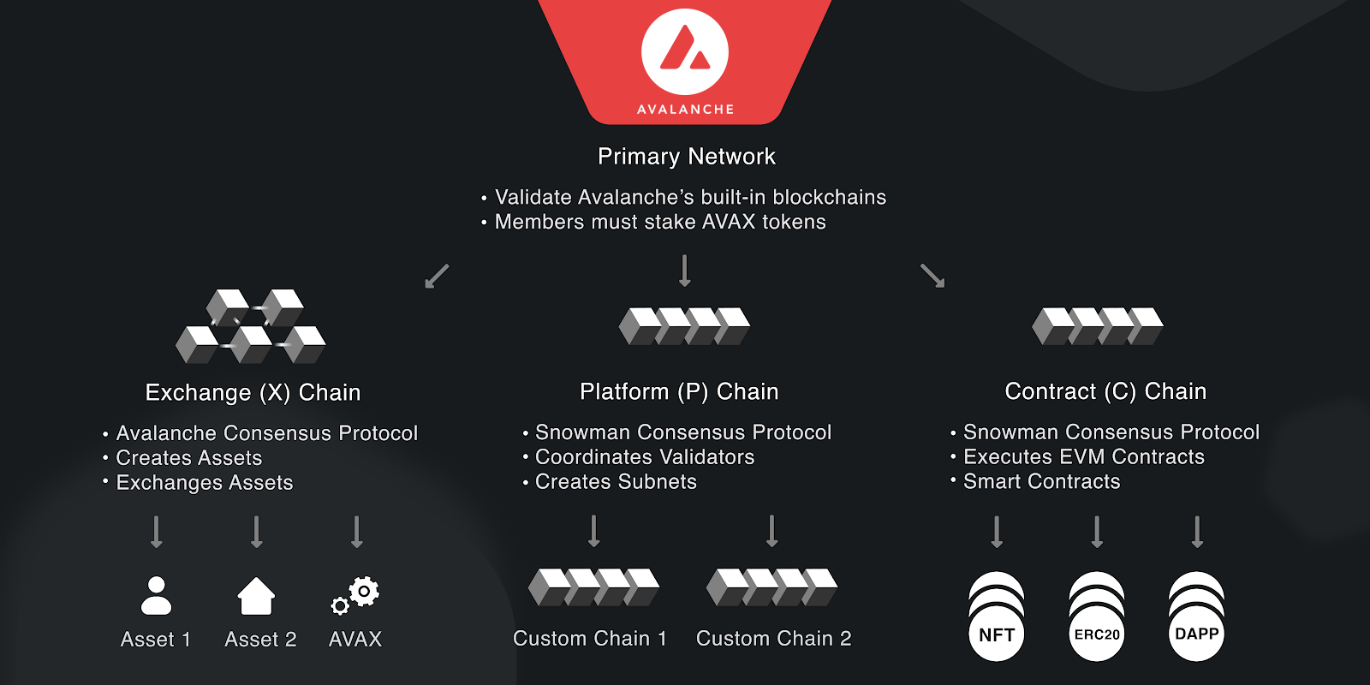
The virtual machine (VM) determines how your blockchain processes transactions. For Ethereum compatibility, the X-Chain or C-Chain VMs allow you to deploy Solidity smart contracts using existing developer tools. For custom logic, such as novel asset types or specific compliance rules, the S-Chain or a custom VM provides the flexibility to define unique state transition rules.
Define the governance structure and economic incentives for your subnet. You must decide who holds the authority to add or remove validators and how block rewards are distributed. Setting up a multi-signature governance model can provide the security and decentralization that institutional stakeholders typically require.
Connect your new blockchain to legacy enterprise systems. Avalanche Evergreen provides tooling for interoperability, allowing you to bridge assets and data between your custom L1 and external databases or other blockchains. This step ensures that your blockchain integrates smoothly into your current IT infrastructure without creating data silos.
Before mainnet launch, deploy a testnet version of your subnet to stress-test performance and security. Use this phase to verify consensus speed, transaction throughput, and smart contract functionality. This proof of concept reduces the risk of costly errors and validates that the infrastructure meets your specific operational benchmarks.
Critical Risks and Misleading Claims
Avalanche Evergreen infrastructure promises institutional-grade scalability, but the gap between marketing and technical reality can be costly. Before committing capital or development resources, you need to separate the actual utility of Avalanche L1s from the hype surrounding "evergreen" deployments.
The "Evergreen" Misconception
The term "evergreen" suggests perpetual uptime and zero maintenance, but this is a simplification. Avalanche L1s are custom subnets that require active governance and validator participation. If a project assumes the infrastructure will run itself without dedicated node operators, it faces immediate centralization risks. The official documentation clarifies that while tooling exists to streamline deployment, the operational burden shifts to the project team rather than disappearing. Treating this as a set-and-forget solution is a common mistake that leads to network stagnation.
Overlooking Consensus Trade-offs
Avalanche’s consensus mechanism, the Avalanche Consensus Protocol, offers fast finality but introduces complexity in validator selection. Weak options often ignore the cost of decentralization. Projects that prioritize speed over validator diversity may find themselves vulnerable to collusion or single points of failure. The technical chart for AVAX reflects market sentiment toward these structural risks, showing volatility spikes when network upgrades or governance disputes arise. Understanding this link between protocol design and price action is essential for realistic valuation.
Ignoring Validator Economics
Many institutional deployments fail to account for the economic incentives required to maintain a healthy subnet. If the rewards for validators do not cover the operational costs of high-performance nodes, the network will rely on a small number of providers. This centralization undermines the core value proposition of blockchain infrastructure. Projects must model these costs carefully, ensuring that the tokenomics support a sustainable validator ecosystem from day one. Without this foundation, the "evergreen" label becomes a marketing term rather than a technical guarantee.
No comments yet. Be the first to share your thoughts!