What Avalanche Evergreen Actually Is
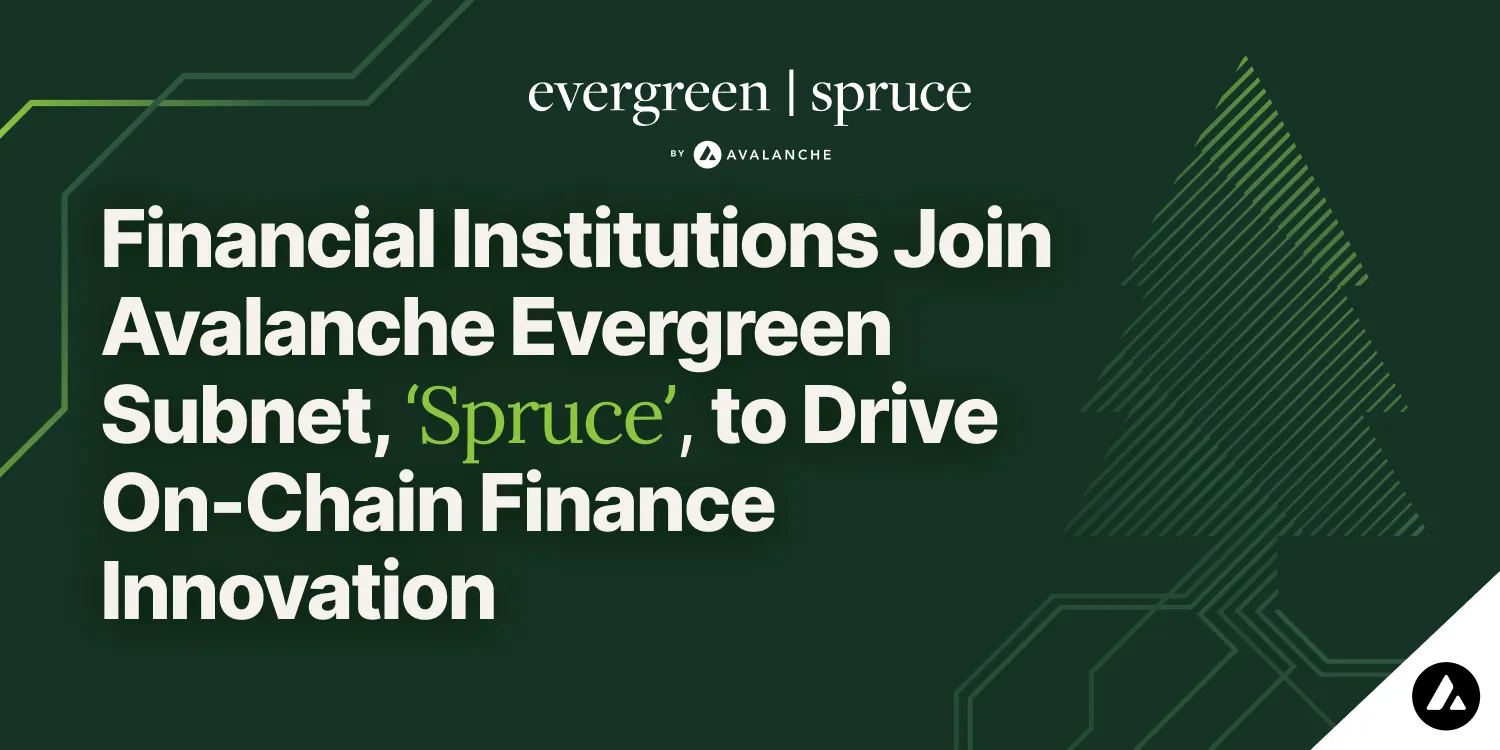
Avalanche Evergreen is not a new token or a separate public chain. It is a framework for deploying customizable, permissioned Layer 1 blockchains (L1s) on the Avalanche network, designed specifically for institutional use cases. Built by Ava Labs, Evergreen provides the infrastructure companies need to run private, compliant blockchains that can still interoperate with the broader Avalanche ecosystem.
Unlike the public AVAX chain, which is open to everyone, an Evergreen L1 is a dedicated blockchain instance. This allows financial institutions to control access, enforce specific compliance rules, and manage data privacy without sacrificing the high throughput and low latency that Avalanche is known for. Think of it as having your own private lane on a highway: you still benefit from the road's speed and structure, but you control who gets in and what they carry.
The platform offers out-of-the-box tooling to address company-specific and industry-wide considerations. This includes support for various consensus mechanisms, customizable governance models, and integration with existing enterprise systems. By using Evergreen, institutions can launch a blockchain that meets regulatory requirements while leveraging the security and scalability of the underlying Avalanche subnet architecture.
This distinction is critical for institutional adoption. It separates the infrastructure layer from the asset layer, allowing banks, asset managers, and other regulated entities to build the underlying rails for digital assets, stablecoins, or tokenized securities without exposing themselves to the volatility or regulatory ambiguity of public crypto markets.
For more details on the specific capabilities and deployment options, visit the Avalanche Evergreen website.
How Evergreen Subnets Solve Compliance
Financial institutions cannot operate on public blockchains without addressing data privacy and regulatory visibility. Public ledgers expose transaction details to everyone, creating compliance risks for banks and asset managers. Avalanche Evergreen Subnets solve this by providing a permissioned infrastructure layer where data visibility is controlled.
The core mechanism is selective visibility. Unlike standard Avalanche subnets where all validators see all data, Evergreen subnets use privacy-preserving token formats. This allows the network to partition data. Regulators, auditors, and internal compliance officers see full transaction details. Competitors or the public see only the necessary proof of solvency or settlement without the underlying trade data. It functions like a vault with different keys for different personnel.
This architecture relies on the Spruce testnet architecture to validate these privacy features. The system ensures that while the blockchain remains immutable and secure, the sensitive metadata remains encrypted from unauthorized eyes. This selective visibility is what allows institutions to meet strict data protection laws while still benefiting from blockchain speed and finality.
The result is a hybrid environment. Institutions get the transparency required for audits and the efficiency of blockchain settlement, without the public exposure that previously made crypto unviable for traditional finance.
The Spruce Testnet and Privacy Features
Institutional adoption of blockchain technology often stalls at the compliance threshold. Enterprises need to know that their data remains confidential while still satisfying regulatory audits. The Spruce testnet addresses this friction by introducing privacy-preserving token formats designed specifically for these high-stakes environments.
Unlike standard public tokens where every transaction is visible to the entire network, Spruce enables selective data visibility. This means that while the blockchain maintains its integrity, the specific details of a transaction can remain hidden from general observers. Only authorized actors—such as auditors, regulators, or the counterparties involved—can view the full data payload. This creates a "privacy layer" that allows companies to operate on-chain without exposing proprietary financial strategies to competitors.
This architecture is critical for institutional utility. It allows financial institutions to leverage the speed and finality of Avalanche Evergreen subnets without violating data privacy laws like GDPR or internal security protocols. By decoupling transaction validity from transaction visibility, Spruce provides the infrastructure needed for private asset issuance and confidential settlement. It transforms the blockchain from a public ledger into a secure, permissioned tool for enterprise-grade finance.
Real-World Use Cases and Case Studies
Avalanche Evergreen moves beyond theoretical blockchain architecture to solve specific institutional friction points. By providing pre-configured, compliant L1s, it allows financial entities to bypass the heavy lifting of building regulatory infrastructure from scratch. This focus on TradFi integration is where the technology sees its most immediate utility.
Compliance-Ready Infrastructure
Traditional financial institutions often hesitate to adopt blockchain due to the complexity of implementing KYC/AML and data privacy controls. Evergreen subnets address this by embedding these requirements directly into the chain’s genesis. Instead of retrofitting compliance onto a public network, firms deploy an Evergreen L1 that is "compliance-native." This reduces the technical debt and legal risk associated with onboarding regulated assets. As noted by Blockworks Research, these turnkey solutions offer a pathway for traditional operations to interact with onchain liquidity without compromising regulatory standing.
Institutional Case Studies
Avalanche has partnered with various organizations to demonstrate this capability. Official case studies highlight how enterprises are using Evergreen to scale blockchain infrastructure infinitely while maintaining specific operational controls. These deployments often involve tokenizing real-world assets or creating private settlement layers for high-frequency trading firms that require deterministic finality and strict access controls. The focus remains on infrastructure reliability and auditability rather than speculative tokenomics.

Public Subnet vs. Evergreen L1
Choosing between a public subnet and an Evergreen L1 depends on the institution's need for privacy and speed. Public subnets offer flexibility and community interaction but may lack the pre-baked compliance features required by strict financial regulators. Evergreen L1s provide a more contained environment, optimized for specific industry-wide considerations.
Institutional Subnet Strategy
Avalanche Evergreen positions itself as the infrastructure layer for institutional adoption, offering out-of-the-box blockchains tailored to specific regulatory and operational needs. Unlike retail-focused chains that prioritize speculative activity, Evergreen subnets provide the compliance and customization required by financial institutions. This focus on utility over hype defines its competitive standing against Ethereum and Solana.
Fee Structures and Throughput
For institutions processing high volumes of transactions, cost efficiency is a primary driver. Avalanche offers a significant advantage in transaction costs, with average fees estimated at $0.08 compared to Ethereum’s typical $1.50 per transaction. This low-cost structure allows for micro-transactions and high-frequency trading strategies that are often prohibitive on legacy networks. While Solana also boasts low fees, Avalanche’s subnet architecture allows institutions to tailor throughput and finality guarantees to their specific risk profiles.
Competitive Positioning
The institutional blockchain space is crowded, but Avalanche’s strategy of modular customization sets it apart. Ethereum remains the dominant settlement layer, while Solana leads in consumer-facing speed. Avalanche bridges the gap by offering a platform where institutions can run private or permissioned subnets that inherit the security of the main network while maintaining control over governance and data privacy. This hybrid approach makes it a compelling choice for banks and asset managers looking to tokenize assets without sacrificing regulatory compliance.
Frequently Asked Questions About Evergreen
Helpful gear
Use these product recommendations as a starting point, then choose the size, material, and price point that fit how you actually use the gear.


As an Amazon Associate, we may earn from qualifying purchases.
No comments yet. Be the first to share your thoughts!