Define your institutional requirements
Before writing a single line of code, you must determine why a standard public Avalanche subnet won't suffice. Public chains are built for openness, which means they expose transaction data to the world and allow any wallet to interact with your smart contracts. For enterprises handling sensitive financial data, healthcare records, or proprietary supply chain logs, this level of transparency is a liability, not a feature.
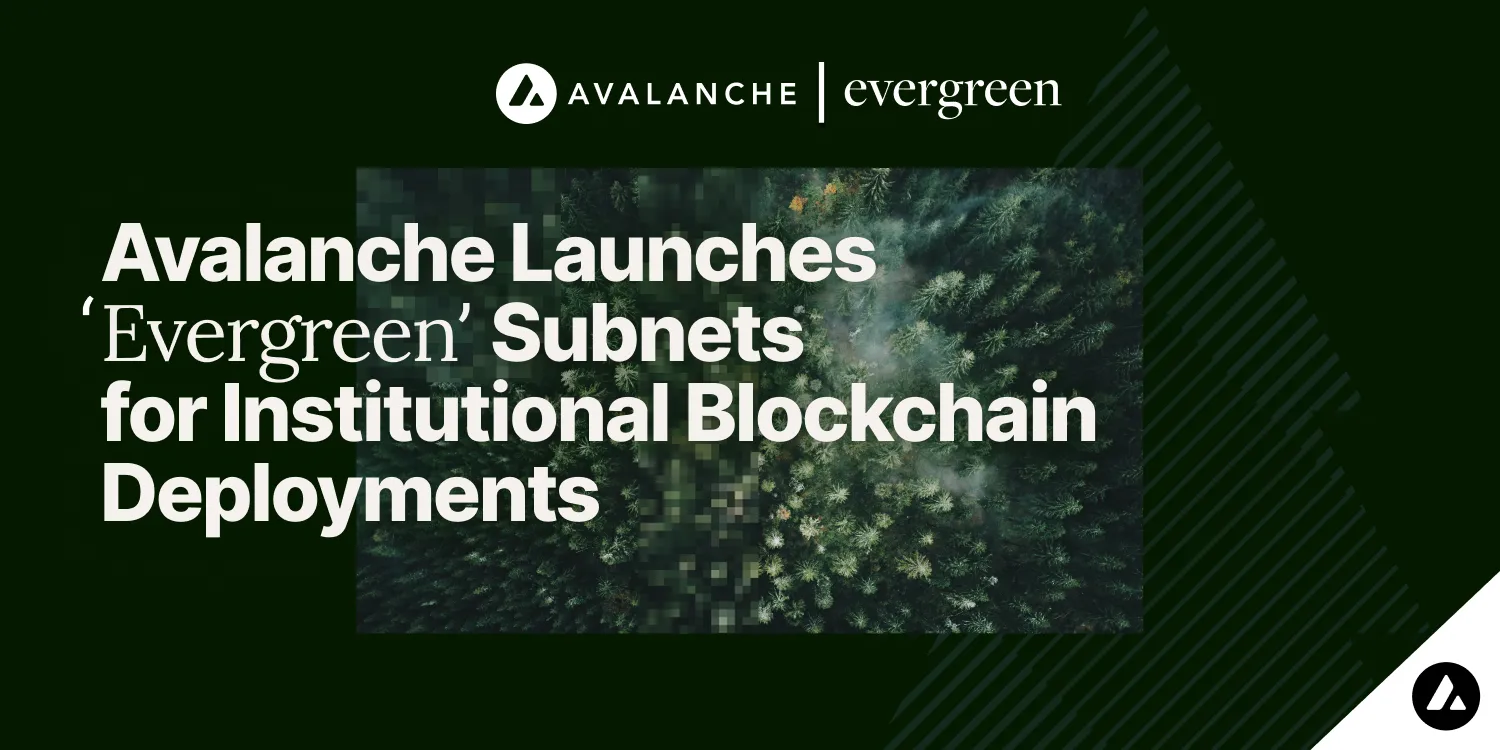
Avalanche Evergreen solves this by providing a framework for custom Layer 1 (L1) blockchains that live on the Avalanche network but operate with strict institutional controls. Unlike a generic subnet that shares consensus with thousands of other nodes, an Evergreen L1 offers a dedicated, permissioned environment. This allows you to enforce compliance standards, such as KYC/AML checks at the protocol level, and ensure that only verified participants can validate transactions or access sensitive data.
When defining your requirements, focus on three core pillars: access control, data privacy, and regulatory compliance. You need to decide who can join the network (permissioned vs. permissionless), how data is encrypted or shared, and which regulatory bodies you must report to. This upfront clarity prevents costly re-engineering later and ensures your blockchain infrastructure is built for enterprise-grade security from day one.
Choose between Spruce Testnet and Production L1
Before writing your first line of code, you need to decide which environment fits your current stage. Avalanche Evergreen isn't a single product; it's a suite of tooling that allows institutions to spin up custom blockchains with specific compliance features [[src-serp-7]]. The choice essentially comes down to two distinct paths: the Spruce Testnet for development and validation, and the production-ready Evergreen L1 for live deployment.
Think of the Spruce Testnet as your sandbox. It is a purpose-built blockchain stack where privacy, compliance, and control are not optional, but it is designed for iteration, not finality [[src-serp-4]]. You use this environment to test how your custom logic handles real-world transaction volumes and regulatory checks without risking actual capital. If you are building an infrastructure subnet for institutional use, this is where you prove the concept.
Once your subnet passes rigorous internal audits, you move to the production Evergreen L1. This is where the rubber meets the road. Production L1s offer the finality, security, and network effects required for live assets. The decision isn't just technical; it's about risk management. Spruce lets you fail fast and cheap; production L1s require you to get it right because the stakes are real.
To help you visualize the trade-offs, here is a direct comparison of the two environments. This table highlights the differences in security posture, speed, and cost structure that will impact your budget and timeline.
| Feature | Spruce Testnet | Production Evergreen L1 |
|---|---|---|
| Primary Use Case | Development, testing, compliance validation | Live asset issuance, institutional settlement |
| Security Model | Isolated, no real-value risk | Mainnet security, finality guarantees |
| Transaction Speed | Optimized for rapid iteration | Optimized for throughput and low latency |
| Cost Structure | Minimal or free (test tokens) | Real AVAX for gas and validator fees |
| Compliance Tools | Full feature parity for testing | Production-grade KYC/AML integration |
Choosing the wrong path can lead to costly re-architecting later. If you skip the Spruce phase, you risk deploying a subnet with untested compliance logic, which is unacceptable for institutional investors. Conversely, staying on Spruce too long delays time-to-market. The goal is to use Spruce to eliminate uncertainty, then deploy to production with confidence.
Deploy the subnet with compliance controls
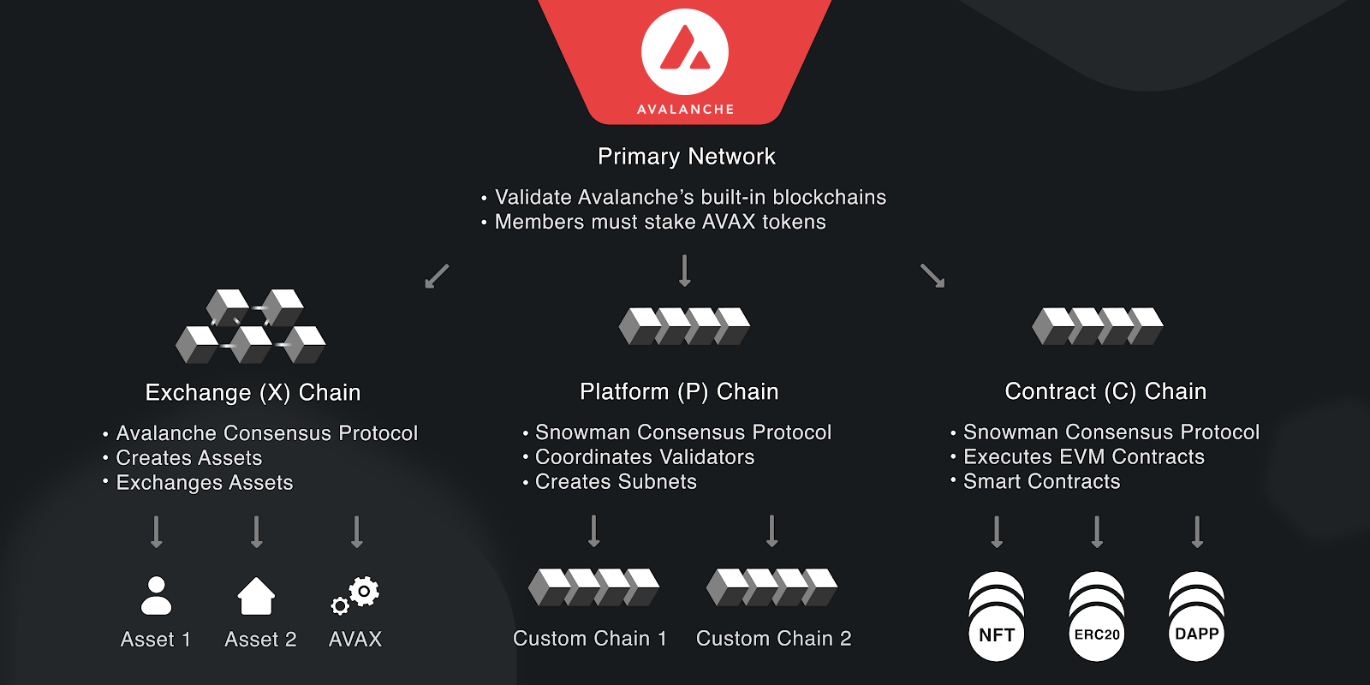
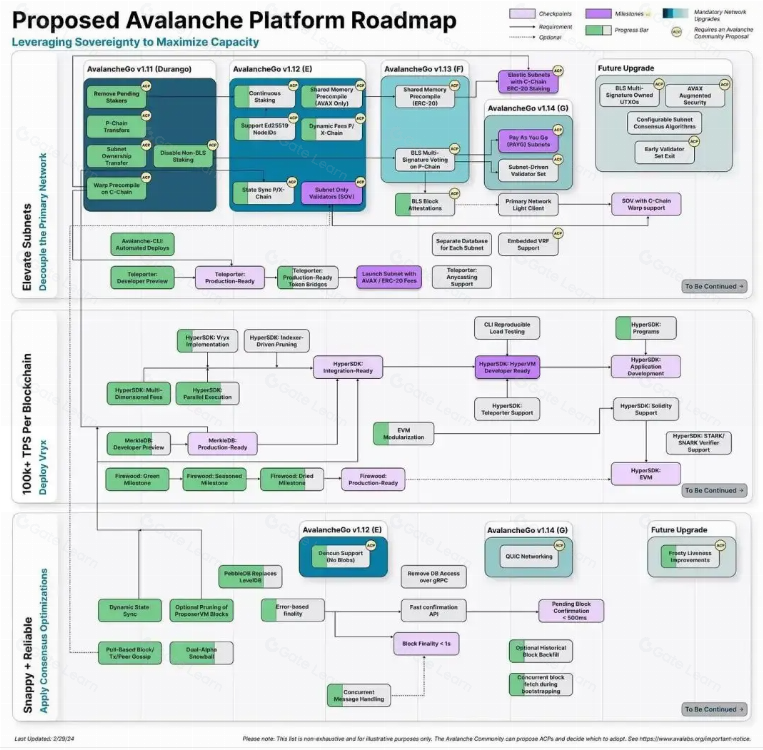
Build an Avalanche Evergreen Infrastructure Subnet works best as a clear sequence: define the constraint, compare the realistic options, test the tradeoff, and choose the path with the fewest hidden costs. That order keeps the advice usable instead of decorative. After each step, pause long enough to check whether the recommendation still fits the reader's actual situation. If it depends on perfect timing, unusual access, or a best-case budget, include a simpler fallback.
Integrate market research and analytics
Once your subnet is live, the focus shifts from deployment to monitoring. Institutional decision-making relies on real-time visibility into subnet performance and market conditions. You need to track metrics that matter to your stakeholders, such as transaction throughput, latency, and fee structures, alongside broader ecosystem trends.
Avalanche provides several tools to gather this data. The primary source for technical performance is the Avalanche Explorer, which offers detailed insights into block production and validator activity. For broader market context, you can monitor AVAX price movements and volume using financial data platforms. This dual approach ensures you are not just watching your subnet in isolation, but understanding its position within the wider Avalanche ecosystem. When integrating these tools, prioritize official sources for technical claims. The Avalanche documentation serves as the definitive reference for node metrics and subnet configuration. For market data, rely on established financial APIs or exchanges rather than unverified third-party aggregators. This ensures the integrity of your analytics dashboard and builds trust with institutional partners who require auditable data sources.
Common Pitfalls in Evergreen Deployment
Institutional teams often treat Evergreen as a standard permissioned chain, but the framework’s emphasis on privacy and compliance creates distinct deployment risks. The Spruce testnet was built specifically to address these complexities, ensuring that control mechanisms are not an afterthought but a foundational element of the subnet architecture [src-serp-4]. When institutions underestimate the overhead required to configure these controls, they frequently encounter friction during the transition to mainnet.
Misconfiguring Permissioning Logic
One of the most frequent errors is assuming that standard Avalanche network permissions apply directly to Evergreen subnets. Evergreen requires explicit, granular permissioning logic that must be rigorously tested in isolation. Failing to validate these permissions in the Spruce testnet environment before mainnet deployment can lead to irreversible access issues or security vulnerabilities. Always test permissioning logic in Spruce before mainnet deployment.
Underestimating Compliance Overhead
Another critical mistake is viewing compliance as a static checklist rather than a dynamic operational requirement. Evergreen is designed to complement public chains by offering a structured environment for institutional use cases, but this structure demands continuous oversight [src-serp-6]. Teams often deploy the infrastructure first and attempt to bolt on compliance tools later, which disrupts the intended workflow and increases technical debt. It is more effective to integrate compliance checks into the subnet’s genesis configuration from the outset, ensuring that the chain’s privacy features align with regulatory expectations from day one.
Frequently asked questions about Avalanche Evergreen
Investors evaluating Avalanche Evergreen often look for clarity on token utility and long-term viability. The following questions address common concerns about the Evergreen infrastructure and its role within the broader Avalanche ecosystem.
Understanding these distinctions helps clarify how Evergreen fits into the broader strategy for blockchain infrastructure. The initiative aims to reduce friction for enterprises entering the space, leveraging Avalanche’s existing security model rather than creating isolated ecosystems.
Helpful gear
Use these product recommendations as a starting point, then choose the size, material, and price point that fit how you actually use the gear.


As an Amazon Associate, we may earn from qualifying purchases.
No comments yet. Be the first to share your thoughts!